
can i track mountain gorillas in rwanda?
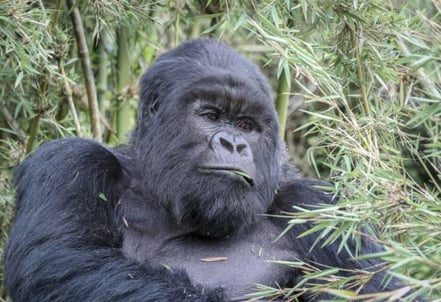
Rwanda’s gorilla trekking takes you to Volcanoes National Park, also known as Parc des Vulcans in French, situated in Musanze village. click here to view mountain gorilla trekking safaris
Volcanoes National Park's vegetation is comprised of vent swamps, bamboo forests, savannah grassland, and five volcanoes (Mount Bisoke, Mount Karisimbi, Mount Muhabura, Mount Sabyinyo, and Mount Gahinga), which is good for hiking experiences. Volcanoes National Park is accessible by road and air from Kigali and Gisenyi. Click here to see our recommended gorilla trekking tour.
Volcanoes National Park is in the northern part of Rwanda, covering an area of about 160 kilometers square within the oldest African forest. It is among the great Virunga Volcano Conservation Area, which connects Virunga National Park of the Democratic Republic of the Congo and Mgahinga National Park of Uganda.
Volcanoes National Park mountain gorilla trekking is an amazing tour activity that makes it incomparable to any other national park in Rwanda, with an estimate of over 600 mountain gorillas and 10 habituated gorillas waiting for luxurious travelers visiting that region. The park is also home to the famous golden monkeys.
The Volcanoes National Park region is also known because of the American Zoologist Dian Fossey who settled in Karisimbi in 1967 after she was threatened by political insecurities from Congo. She moved to Rwanda, where she spearheaded the fight for the conservation of mountain gorillas, which were extinct due to smugglers and poachers.
How many mountain gorilla families are in Volcanoes National park Rwanda?
Volcanoes National Park is blessed with 10 mountain gorilla families. These are the Karisimbi gorilla family, Susa gorilla family, Sabyinyo gorilla family, Amahoro gorilla family, Umubano gorilla family, Agashya gorilla family, Hirwa gorilla family, Ugyenda gorilla family, Kwitonda gorilla family, Bwenge gorilla family, and Titus gorilla family, Gorilla grouping was done to prevent mountain gorillas from being overwhelmed by too many tourists, which may force them to react negatively by attacking visitors in return, if they feel overwhelmed by too many tourists.
Susa mountain gorilla family
Susa mountain gorilla family had 42 members but was reduced to 28 members due to death and fights; Susa mountain gorilla family is endowed with twins Byishimo and Impano; Susa mountain gorilla family lives at the highest altitude of Mount Karisimbi.
Karisimbi mountain gorilla family
The Karisimbi mountain gorilla family, led by a silverback called Nyagakangaga, derived its name from Mount Karisimbi, which is where this mountain gorilla family stays. The Karisimbi mountain gorilla family split from the Susa gorilla family after Nyagakangaga left with 13 Susa gorilla family members; it was called Susa B before being renamed the Karisimbi mountain gorilla family in 2010.
Sabyinyo Mountain gorilla group
The Sabyinyo gorilla family got its name from Mount Sabyinyo, which is where the gorilla family has lived until now. The Sabyinyo mountain gorilla family is the easiest group to track because it’s near the park's headquarters. Sabyinyo has the world's largest silverback, called Guhonda, which weighs about 220 kg and keeps his competitor away from the family.
Amahoro mountain gorilla family
The Amahoro gorilla family got its name from a Kinyarwanda word that means peace, and the family is very peaceful. There are 18 members in the Amahoro gorilla family.
Umubano mountain gorilla family
The Umubano gorilla family was part of the Amahoro mountain gorilla family, which was dominated by Charles before he passed on, and now the family is led by a silverback called Ubumwe, which means "live together." The Umubano gorilla family consists of 13 members.
Kwitonda mountain gorilla family
The Kwitonda mountain gorilla family migrated from the Democratic Republic of the Congo and settled in Rwanda. Researchers indicated they might have moved due to pressure from other gorilla families in Congo or they were searching for food and ended up in the southern part of Rwanda. The Kwitonda mountain gorilla family is being led by Akerevoru, the youngest silverback, after the death of Kwitonda in 2012.
Agashya mountain gorilla family
The Agashya gorilla family consists of 13 members, led by Nyakarima, who was overthrown by a silverback called Agashya. The Agashya mountain gorilla family is always found around Mount Mgahinga's foothills.
Bwenge mountain gorilla family
The Bwenge mountain gorilla family has 11 members and is found in Bisoke areas. The Bwenge mountain gorilla family is led by a silverback named Bwenge, who moved from his original family after his formal group experienced a sad moment when his six infants were born at the same time.
Hirwa mountain gorilla family
The Hirwa mountain gorilla family is among the newest gorilla families with 16 members. It got its name from Kinyarwanda, meaning "lucky one," and it’s very lucky because of the twins in their family.
Ugyenda mountain gorilla family
The Ugyenda gorilla family contains 11 members, the group is gifted with one silverback called Ugyenda, meaning "on the move’’ Ugyenda is always moving and mobile. Ugyenda is found around the Mount Bisoke region and is very hard to trek since they live on the Bisoke slopes.
Titus mountain gorilla family
The Titus mountain gorilla family was named after a silverback named Titus, who was born during zoologist Dian Fossey's research at Karisoke Research Centre. Titus was the only survivor from the entire family when his members were poached, but he endured and was made to join another family at a young age. When he grew up, he broke away with other sharp five females and silverbacks like Beetsme to form their mountain gorilla Titus mountain gorilla family is primarily reserved for research purposes and for tracking on special request in cases of permit shortages.
When is the best time to see mountain gorillas in volcanoes national park?
The dry months between June and September are the most recommended time to travel to Volcanoes national park. There is often a clear cloud cover which makes it a comfortable climatic condition for mountain gorilla trekking in Rwanda.