
why should travelers track mountain gorillas in Uganda?
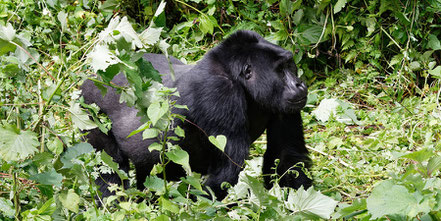
Gorilla trekking takes place in an extensive African jungle location, which adds a layer of exotic adventure that matches any kind of tour worldwide. Mountain gorillas are situated on the edge of Bwindi Impenetrable Forest National Park in Uganda, Mgahinga Gorilla National Park in Uganda, Volcanoes National Park in Rwanda, and Virunga National Park in the Democratic Republic of the Congo. Click here to view mountain gorilla trekking safaris
Mountain gorilla trekking is a non-comparable encounter in the wild; having one-on-one time with these giant apes is a once-in-a-lifetime experience. This safari experience is unbeatable while watching a mountain gorilla family relaxes in their lush natural environment. Click here to see our recommended mountain gorilla trekking tour
Mountain gorillas are in three African countries, all offering the same experiences. Mountain gorillas are about 4-6 feet tall and weigh approximately 136 to 220 kilograms. Mountain gorillas are one of the two subspecies of Eastern gorillas remaining in the African jungle, with over 1,000 mountain gorillas occupying the bamboo and montane forests.
The worldwide mountain gorilla population adds up to 1,063; Uganda has a total of half of the mountain gorillas in the world, while the other remaining population is shared by the Democratic Republic of the Congo and Rwanda. Uganda offers mountain gorilla trekking activities in Bwindi Impenetrable Forest National Park and Mgahinga Gorilla National Park.
Mgahinga gorilla national park is located within the Virunga Chain of Mountain Ranges and is bordered by Volcanoes National Park in the northwestern part of Rwanda and Virunga National Park in the Eastern Democratic Republic of the Congo. Mgahinga National Park has one mountain gorilla family available for trekking, called the Nyakagezi family, with about 7 to 14 individuals.
The Bwindi Impenetrable Forest National Park is the best destination for mountain gorilla trekking in the entire trio of destinations. Uganda possesses the highest number of habituated gorilla groups in the world. Mountain gorilla trekking experience in Bwindi Impenetrable Forest National Park Gorilla trekking in Bwindi Impenetrable Forest National Park is divided into 4 sectors: Buhoma sector, Ruhija sector, Nkuringo sector, and Rushaga sector, the only sector offering mountain gorilla habituation.
what can i do in the rushaga sector of Bwindi impenetrable national park?
Gorilla trekking in the Rushaga sector of Bwindi?
Gorilla tracking is among the most interesting primate activities to be done in the Rushaga sector of Bwindi. Gorilla trekking involves moving into the tropical forest to see mountain gorillas in their natural habitat for either an hour for normal trekking or four hours for gorilla habituation once gorillas are seen.
Gorilla trekking in the Rushaga sector starts at 7:00 am with a short morning briefing at Rushaga Park headquarters on what to do and not to do while trekking in the tropical forest and with the mountain gorillas. After the briefing, the Uganda wildlife Authority park guides, trekkers, and rangers lead you to the tropical rainforest to find the mountain gorillas.
The mountain gorilla choices of the family are allocated to tourists depending on their physical fitness and interest. The gorilla trek may take from an hour to over three hours depending on the location of the gorilla family, but once you see the mountain gorillas, tourists will be given only an hour of viewing and taking photos with the gorilla family. Then later you return to the briefing point or starting point to receive a gorilla trekking certificate for successfully completing gorilla trekking in Uganda. Only eight tourists may see gorillas per gorilla-habituated family per day.
The Uganda mountain gorilla trekking policy only allows tourists who are 15 years old to trek mountain gorillas; people below 15 years are considered minors, so controlling them can be hard, and they may easily transmit diseases such as cough and flue to the mountain gorillas.
Planning your mountain gorilla trek to see gorillas in the Rushaga sector should be done two months prior to travel dates, much as we plan Rushaga gorilla trekking on brief notice. A gorilla trekking permit is the most important element of trekking gorillas in the Rushaga sector and must be booked in advance. Devine African safaris assists in checking gorilla permit availability, reserving, and securing your gorilla trekking permits once you have concluded your travel. Once your mountain gorilla trekking permit is secured, then we will go ahead to book your accommodation and transport to and from the Rushaga sector of Bwindi Impenetrable National Park. For more information regarding planning your gorilla trek to see mountain gorillas in the Rushaga region, kindly contact us via email, phone, or WhatsApp and we will get back to you immediately and advise you accordingly.
Gorilla Habituation experience in the Rushaga region
Gorilla Habituation experience is one of the most sought-after activities to do when planning a safari tour in the Rushaga region of Bwindi. The gorilla habituation experience allows tourists to spend over four hours with the mountain gorillas that are still undergoing the habituation process. A maximum of only four people are allowed to participate in mountain gorilla habituation activity in the Rushaga sector of Bwindi Forest National Park in Uganda.
With this, we require all tourists for the gorilla habituation experience to book their tour with us early enough so that we first secure their gorilla habituation permit in advance. Tourists visit the mountain gorillas that are being habituated; trekkers go with researchers, rangers, and guides; and you monitor the way mountain gorillas feed, rest, and move and also communicate with each other using sounds.
Bird-watching Experience
The Rushaga sector of Bwindi Forest National Park protects various unique bird species, such as the Albertine Rift Endemic birds and they include Handsome Francolin, Dwarf Honeyguides, Rwenzori Nightjar, African Green Broadbill, Yellow-eyed Black-Flycatcher, Archer’s Robin-Chat, Red-throated Alethe, Red-faced Woodland Warbler, Mountain Masked Apalis, Short-tailed Warbler, Collared Apalis, Grauer’s Warbler, Stripe-breasted Tit, Rwenzori Batis, Regal Sunbird, Blue-headed Sunbird, Strange Weaver, and Dusky Crimson wing.
Batwa's Cultural and Community experience
Enjoy the Batwa cultural experience when you travel to the Rushaga region of Bwindi Impenetrable National park. The Batwa used to stay in the forest, commonly referred to as the pygmies, for many years until recently when the government of Uganda removed them from the Bwindi Forest to the surrounding communities near the Park to ease the protection and conservation of mountain gorillas.
The Batwa cultural experience takes tourists to enjoy how the Batwa people used to stay in the forest, harvest wild honey, and hunt wild animals. The Batwa will show off their dancing skills and explain how they have managed to settle and enjoy a normal lifestyle outside Bwindi forest. Tourists can also visit the rest of the local communities in the outskirts of Bwindi forest, the women's groups surviving from making crafts and selling food, and the local community schools.
Nature walks in the Rushaga region of Bwindi impenetrable national park?
Bwindi Forest National Park is characterized by tropical forests that offer ancient tree species, and some of the tree species are endemic to this Bwindi forest. This forest is well known to be impenetrable due to its endless thick canopies, making nature walks pleasant. In Rushaga, tourists always have a chance to learn more about different tree species and butterfly species and see different bird species.
Nature walks in the Rushaga sector are done by experienced and knowledgeable park ranger guides who are willing to share their knowledge of primates, birds, and plant species in Bwindi forest.
When is the best time to visit Bwindi impenetrable forest national park?
The best time to tour Bwindi Impenetrable National Park is I the months of June to August, and then again in December to February yearly, although Bwindi impenetrable forest national park can visited throughout the year.